Built In. Bolted Down. Loading Every Shift.
Pit Levelers for Every Loading Dock
Heavy-duty pit levelers for distribution centers, cold storage warehouses, manufacturing plants, and grocery and retail docks. Recessed flush into the dock floor — rated for loaded forklifts, shift after shift.
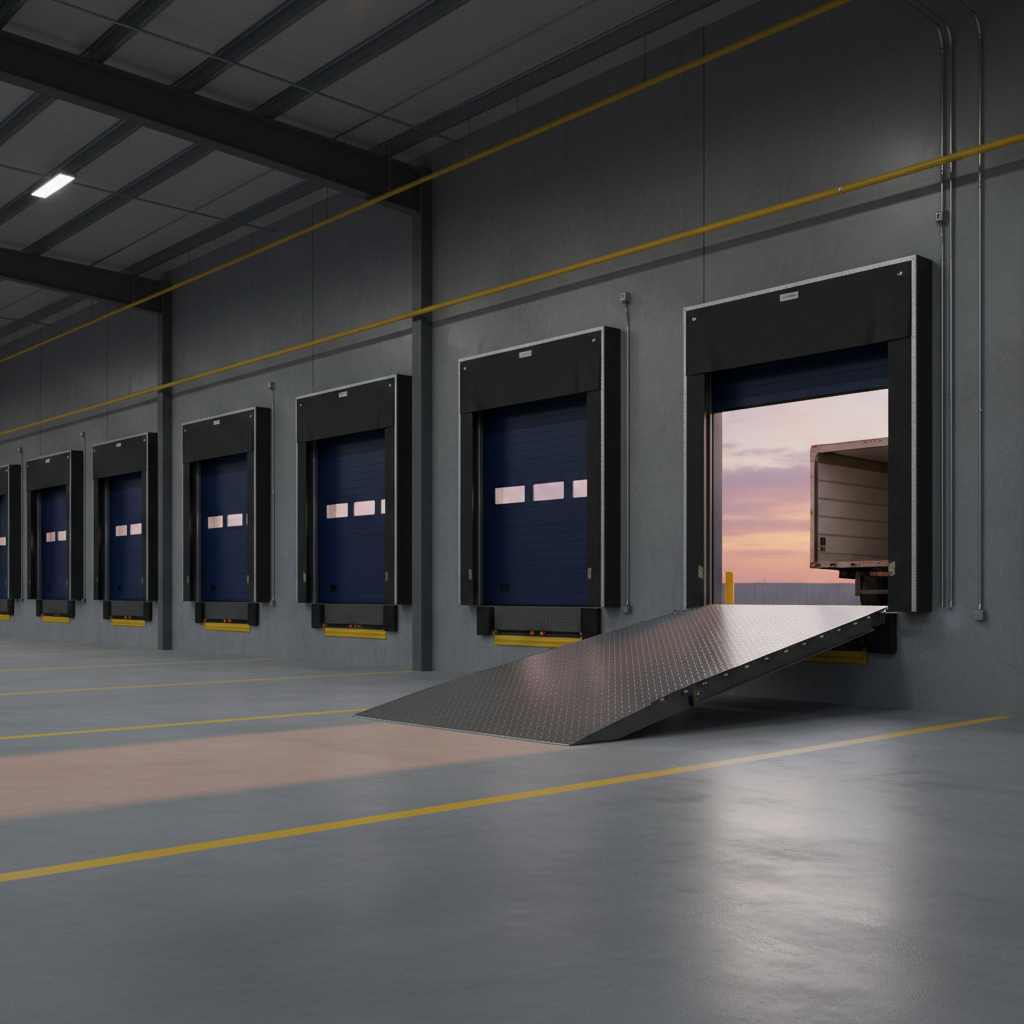
How they work
What a pit leveler does
Trailer beds rarely sit at exactly the height of the dock floor, and they move as the trailer is loaded. A pit leveler closes that height difference and the gap to the trailer. The deck rises, the lip swings out, and the deck settles until the lip rests on the trailer bed. Forklifts then cross a continuous steel ramp.
Because the unit sits in a recessed pit, the stored deck is flush with the floor and out of the way of cross-dock traffic. As the trailer rises or sinks under load, the deck floats with it.
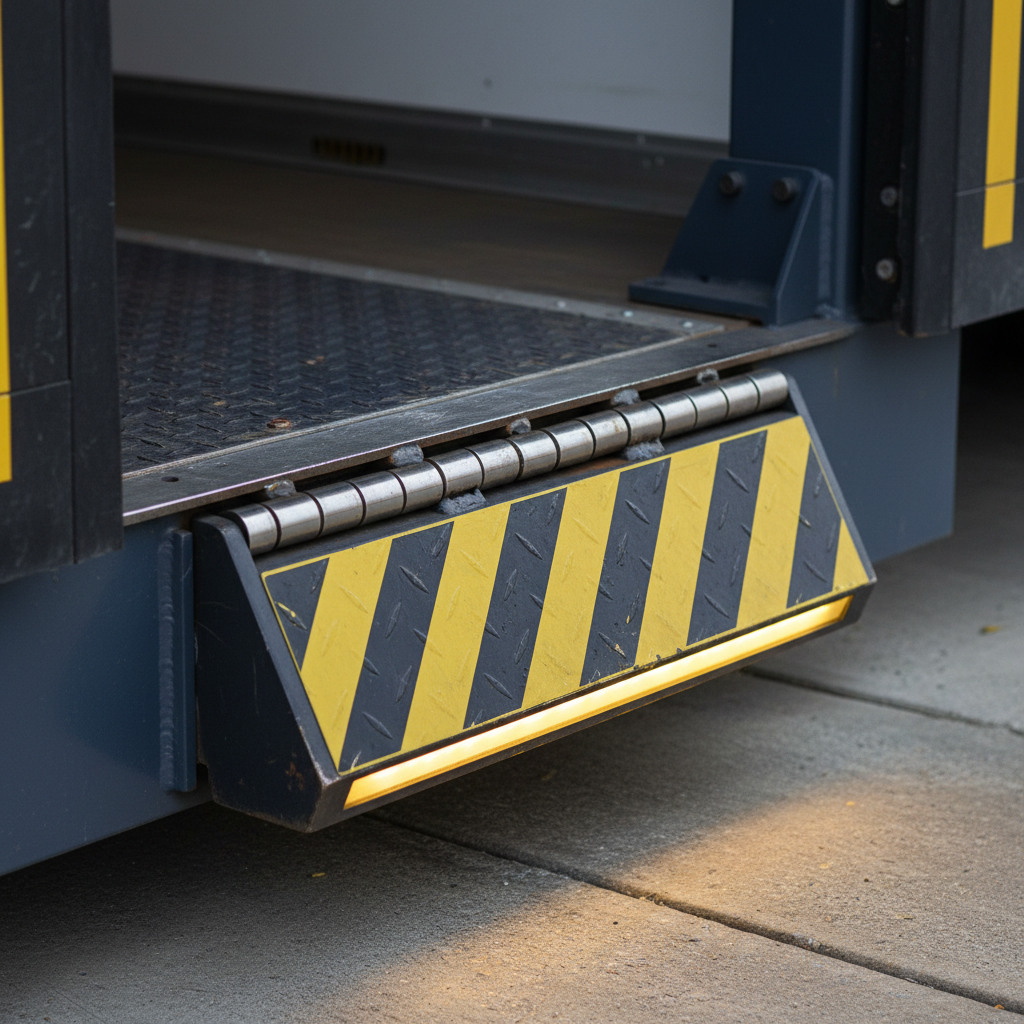
Deck
A steel plate, usually diamond tread, that sits flush with the dock floor when stored. It pivots at the rear hinge and slopes up or down to meet the trailer.
Lip
A hinged steel plate at the front that swings out and rests on the trailer bed. Its length sets how far the leveler can reach past the bumpers.
Lift system
Springs, a hydraulic cylinder, or an air bag raise the deck. The lift system is what separates one leveler type from another and drives cost and upkeep.
Pit and frame
A recessed concrete pit edged with steel curb angles carries the frame and the load. Every crossing forklift puts its weight into this structure.
Leveler types
Mechanical, hydraulic, air-powered, and vertical storing
All four sit in a pit and do the same job. They differ in how the deck is raised, how it is controlled, and what it costs to own.
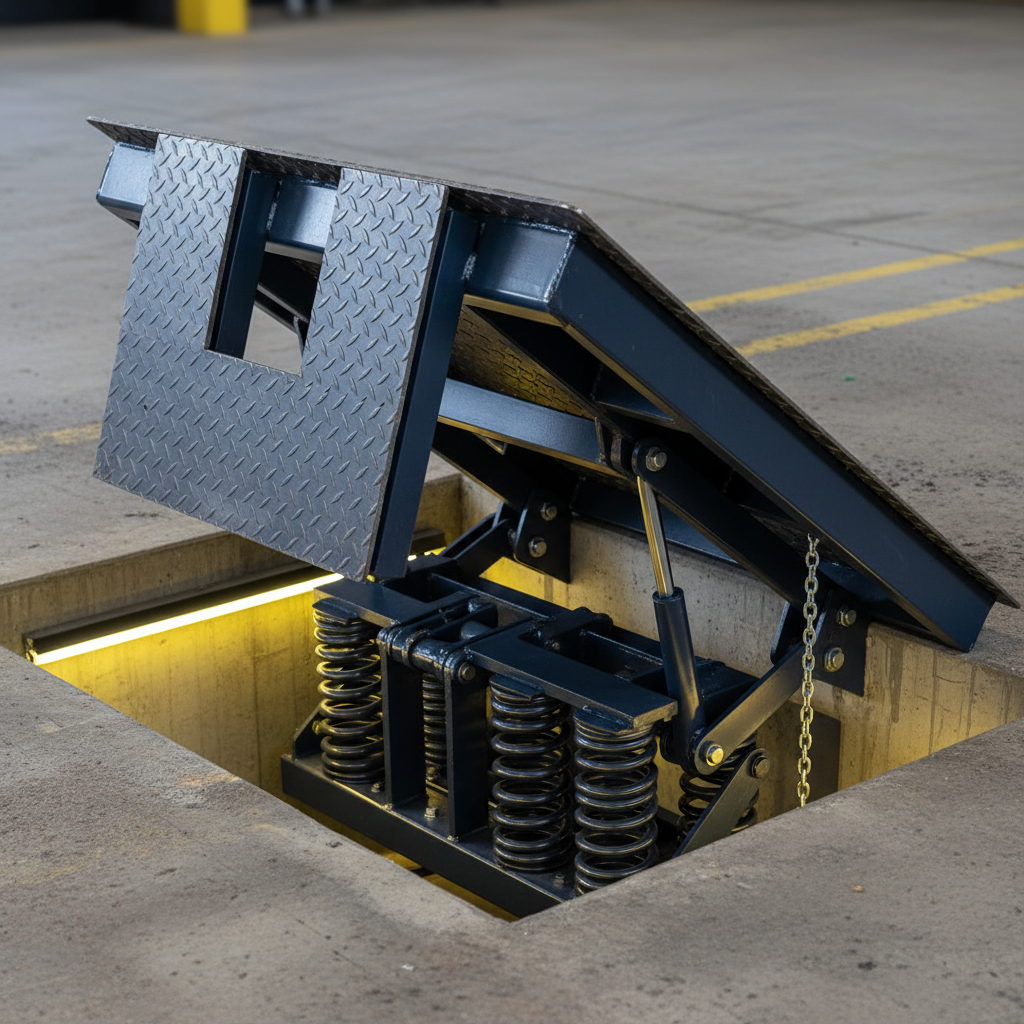
Mechanical pit levelers
The operator pulls a chain or lever, springs raise the deck, the lip extends, and the operator walks the deck down onto the trailer. No power supply is needed at the dock, and the purchase price is the lowest of the pit types.
- Lowest upfront cost and no electrical work at the door.
- Springs and hold-down mechanisms need regular adjustment.
- Suits docks with moderate traffic and consistent trailer heights.
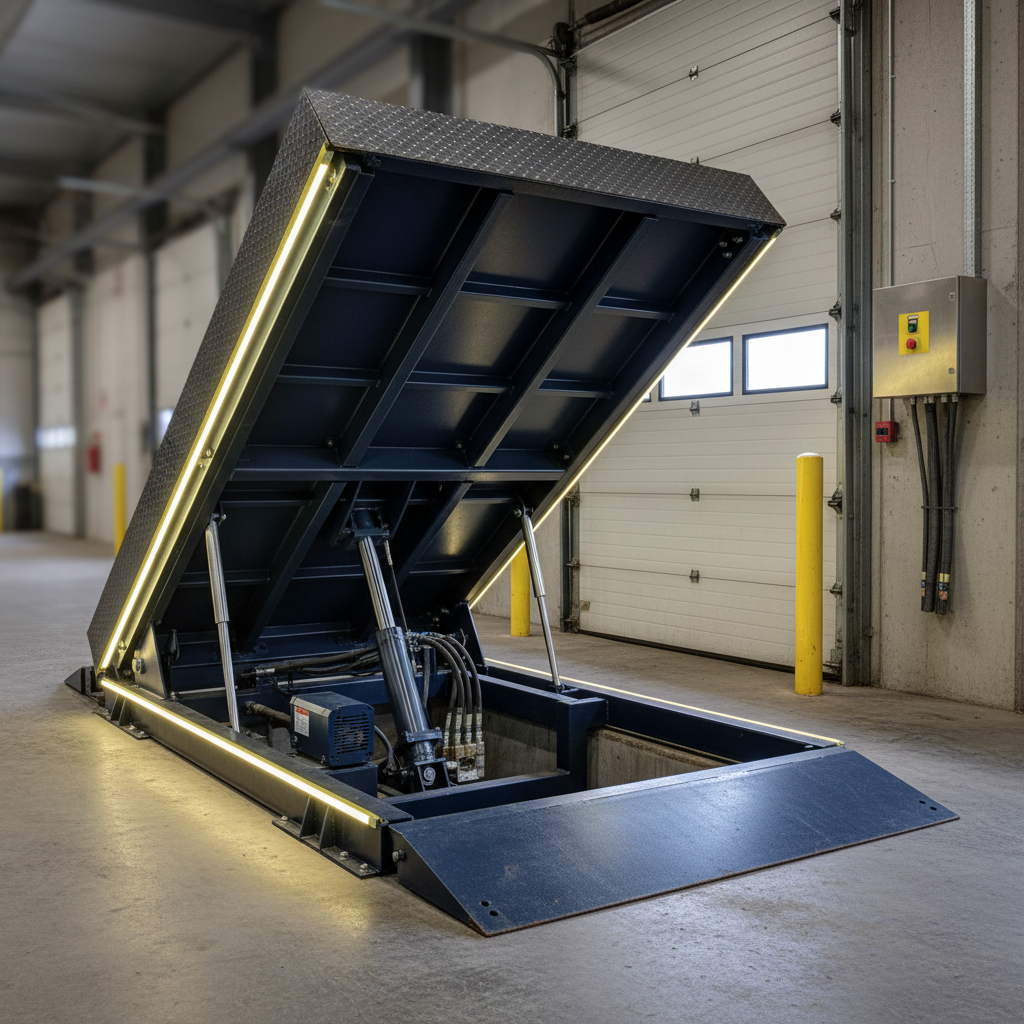
Hydraulic pit levelers
A pump and cylinder raise the deck at the press of a button, and the lip extends automatically. Operation is smooth and repeatable, and there are fewer wearing mechanical parts than a spring unit.
- Push-button control with smooth, consistent travel.
- Lower maintenance over the life of the unit.
- The standard choice for high-traffic distribution docks.
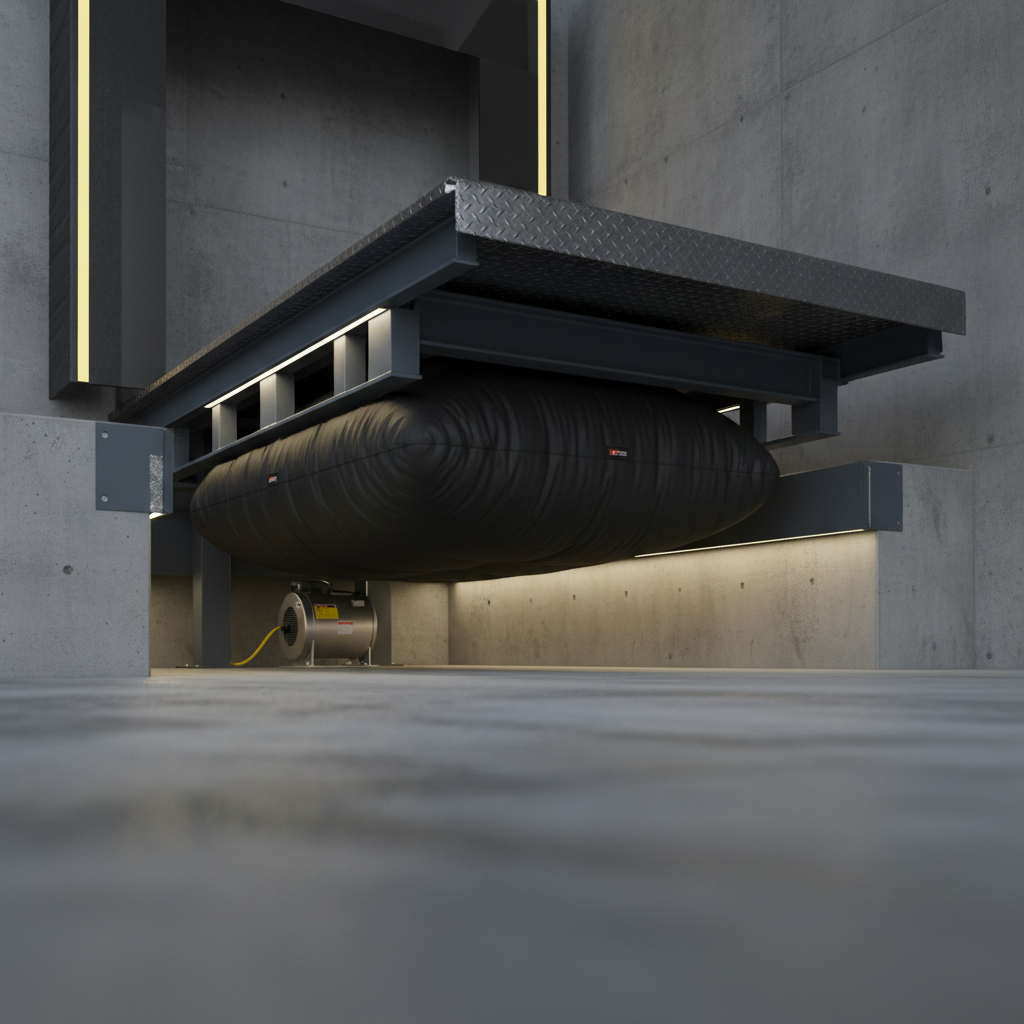
Air-powered pit levelers
A low-pressure blower fills an air bag under the deck to raise it, and the deck settles onto the trailer when the blower stops. Push-button control like hydraulic, with no hydraulic fluid in the pit.
- Push-button operation without hydraulic oil.
- Simple lift system with few moving parts.
- A middle ground on price between mechanical and hydraulic.
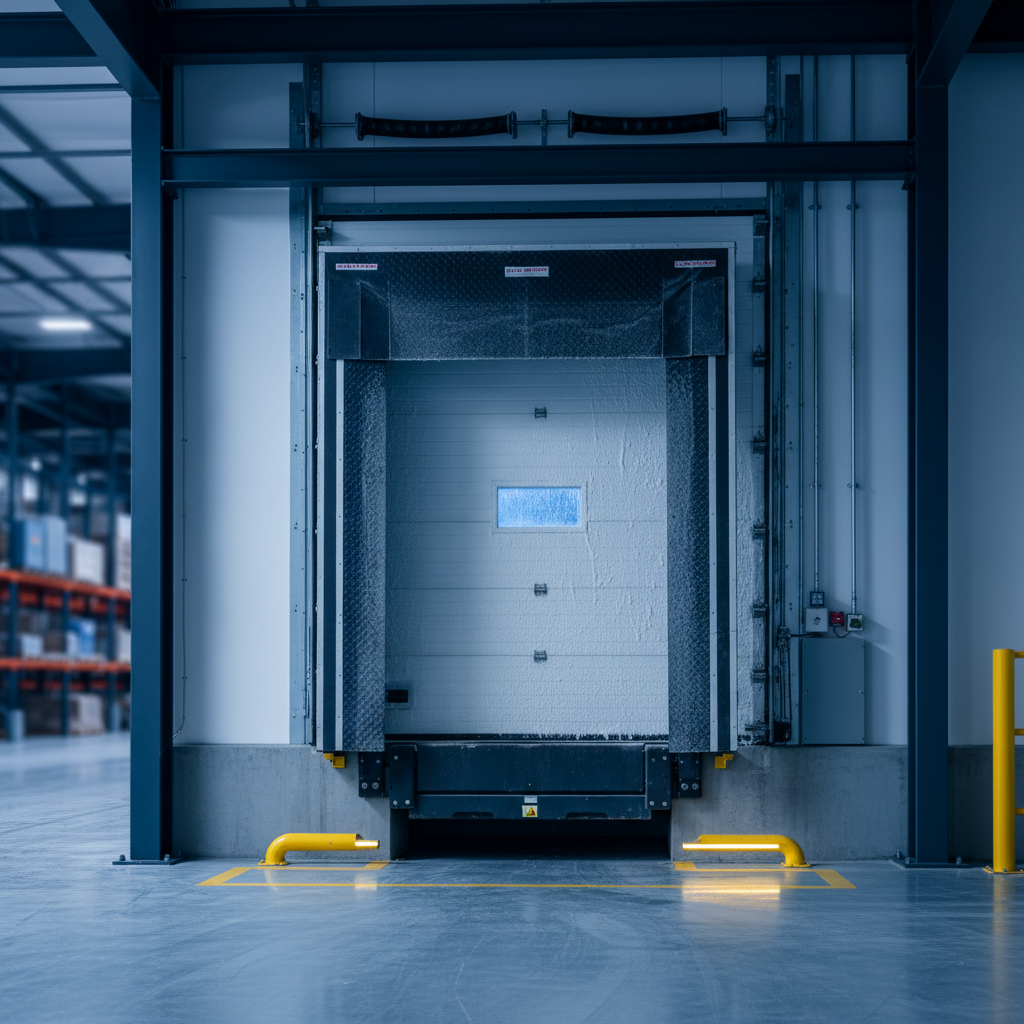
Vertical storing levelers
The deck stores upright inside the building, so the dock door closes against a sealed floor. Chosen for cold storage, food, and sanitation-sensitive docks where an open pit edge would leak air or collect debris.
- The door seals directly to the floor when the leveler is stored.
- Keeps the pit area clean and easy to wash down.
- Higher cost; specified for temperature and hygiene control.
Applications
Where pit levelers work
Any dock that receives trailers at varying heights benefits from a pit leveler. The right specification depends on traffic, load, and temperature.
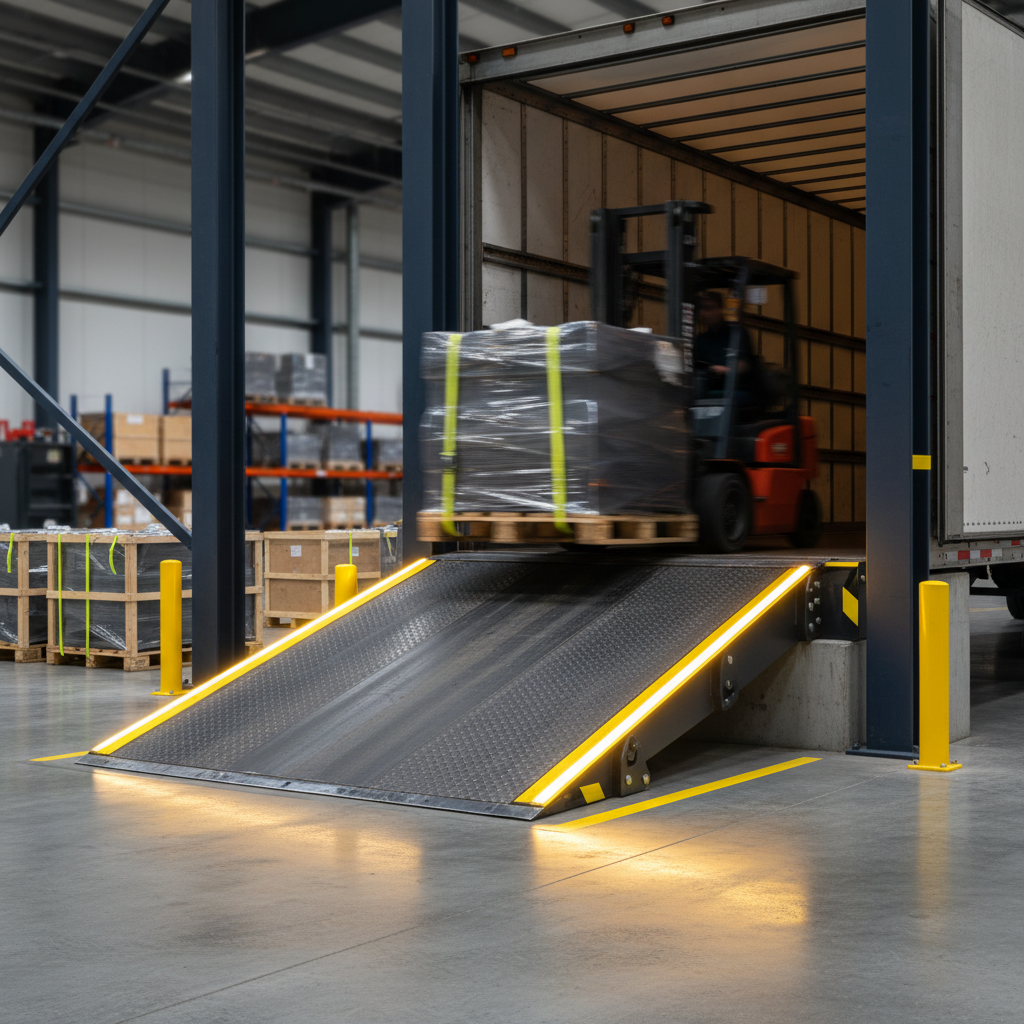
Distribution centers and 3PLs
Dozens of doors, trailers from many carriers, and traffic around the clock. Hydraulic pit levelers with vehicle restraints are the usual specification.
Cold storage and food
Weather seals, insulated construction, and vertical storing units keep refrigerated air inside and meet sanitation needs.
Manufacturing plants
Heavy loads, raw material in and finished goods out. Higher capacity decks and longer lips for mixed trailer fleets.
Grocery and retail docks
Fewer doors but tight delivery windows. Reliable push-button units reduce driver wait times and damage claims.
Parcel and last-mile hubs
Box trucks and trailers at the same door. Wider service range and longer decks cover big differences in bed height.
New construction and retrofits
New buildings pour the pit to the leveler drawing. Retrofits drop replacement units into existing pits.
Sizing and capacity
How to specify a pit leveler
Get these six items right and the leveler will fit the dock, the trucks, and the traffic. Get capacity wrong and hinges and lips wear out early.
| Item | What to check |
|---|---|
| Capacity | Rated in pounds and tested to ANSI MH30.1. Size for the heaviest loaded forklift plus load, then add margin for frequent crossings and steep slopes. Many facilities use 30,000 to 45,000 lb units. |
| Width | 6 ft and 7 ft are the common widths. Match the door opening and the trailers you receive, and leave room for the forklift and load to pass without striking the sides. |
| Length | Roughly 6 to 10 ft covers most docks, with longer decks available. A longer deck lowers the grade for the same height difference, which helps pallet jacks and low-clearance trucks. |
| Service range | How far above and below dock level the deck can reach. Check it against the lowest and highest trailer beds that arrive at that door, including box trucks. |
| Lip length | Longer lips reach past thicker bumpers and seat further into the trailer. Cold storage docks with deep seals often need a longer lip. |
| Controls and options | Push-button or chain release, weather seals, toe guards, free-fall protection, and interlocks with the vehicle restraint and door. |
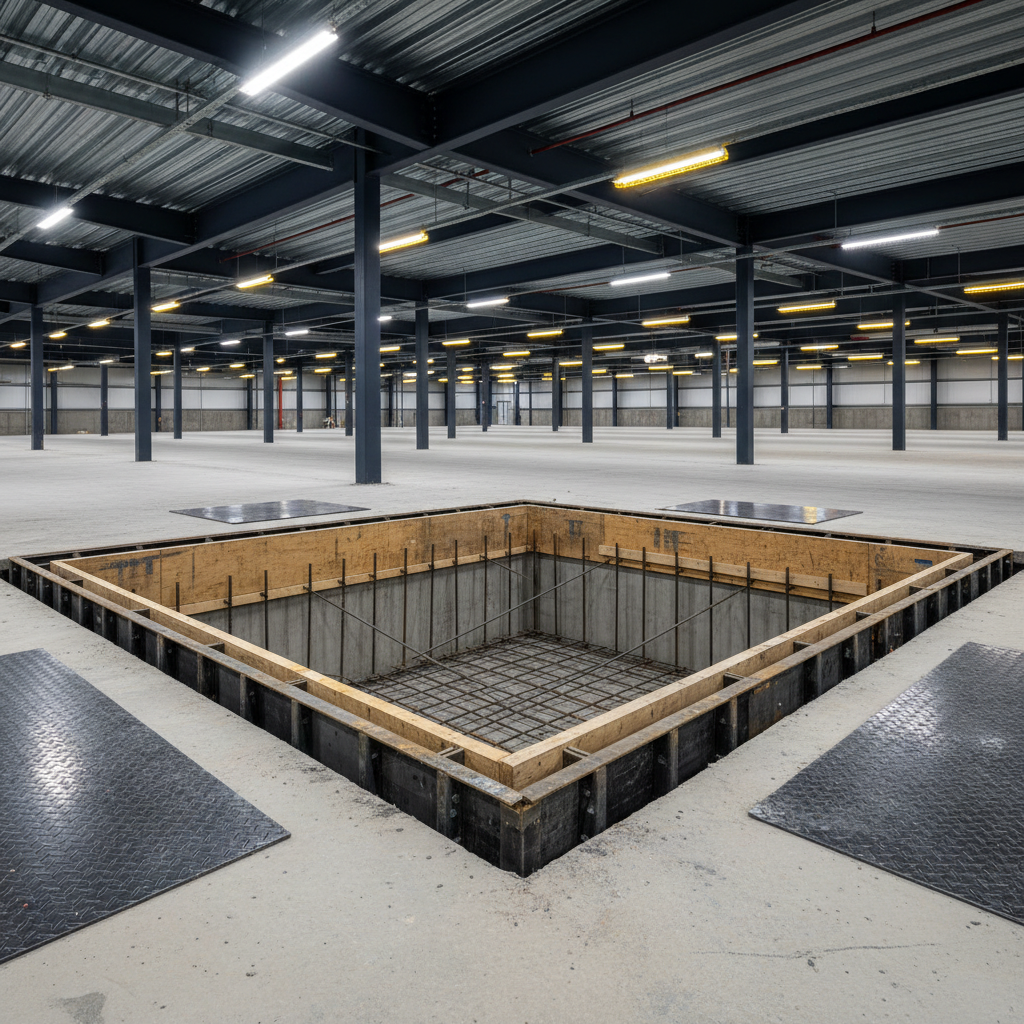
Pit and installation
New pits and replacement units
New construction. The pit is poured to the manufacturer's drawing for the exact model, with steel curb angles cast into the edges and rear. Width, length, depth, and the rear hinge support all come from that drawing, so choose the leveler before the concrete contractor forms the pit.
Replacement. Many replacement levelers are built to drop into common existing pit sizes. Measure width, length, and depth, check the curb angles and concrete for damage, and note the power available at the door. Replacement is also the time to move up in capacity if the old unit wore out early.
Installation. The frame is set, shimmed, and welded to the curb angles, then the controls and any restraint interlocks are wired and tested. Plan the dock closure time with your installer.
Pit vs edge-of-dock
When a pit leveler is the right call
| Pit leveler | Edge-of-dock leveler | |
|---|---|---|
| Height range | Several inches above and below dock level, depending on deck length. | Only a few inches. Best where trailers sit close to dock height. |
| Crossing grade | Gentle, because the deck is long. | Steeper for the same height difference. |
| Construction | Needs a recessed concrete pit poured to the manufacturer's drawing. | Bolts to the dock face. No pit required. |
| Capacity and traffic | Built for heavy loads and continuous traffic. | Suited to lighter duty and lower traffic. |
| Upfront cost | Higher, especially where a pit must be cut. | Lower. |
Cold storage docks
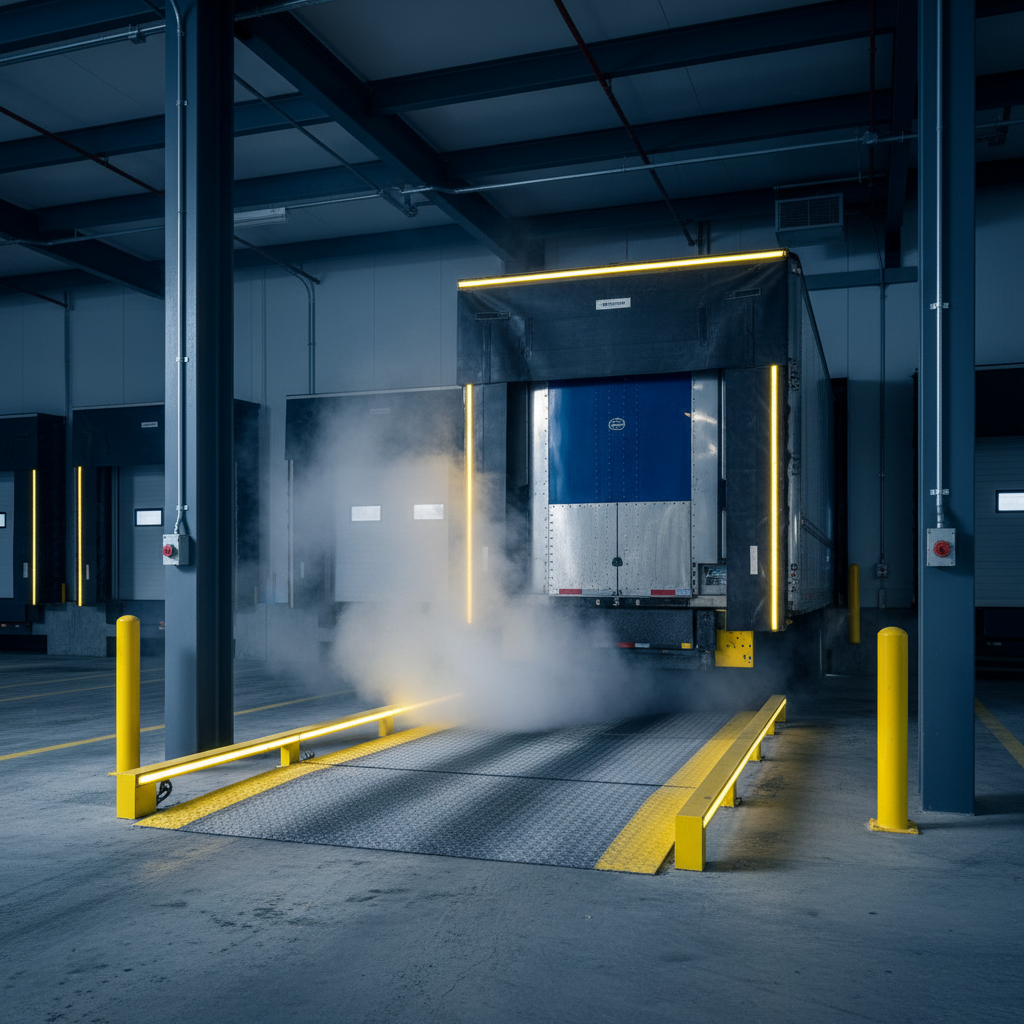
On refrigerated docks, the gap around a pit leveler is a direct path for cold air to escape. Perimeter weather seals, insulated construction, and vertical storing units keep the temperature where it belongs and reduce condensation and ice at the door.
Maintenance
Keep every door in service
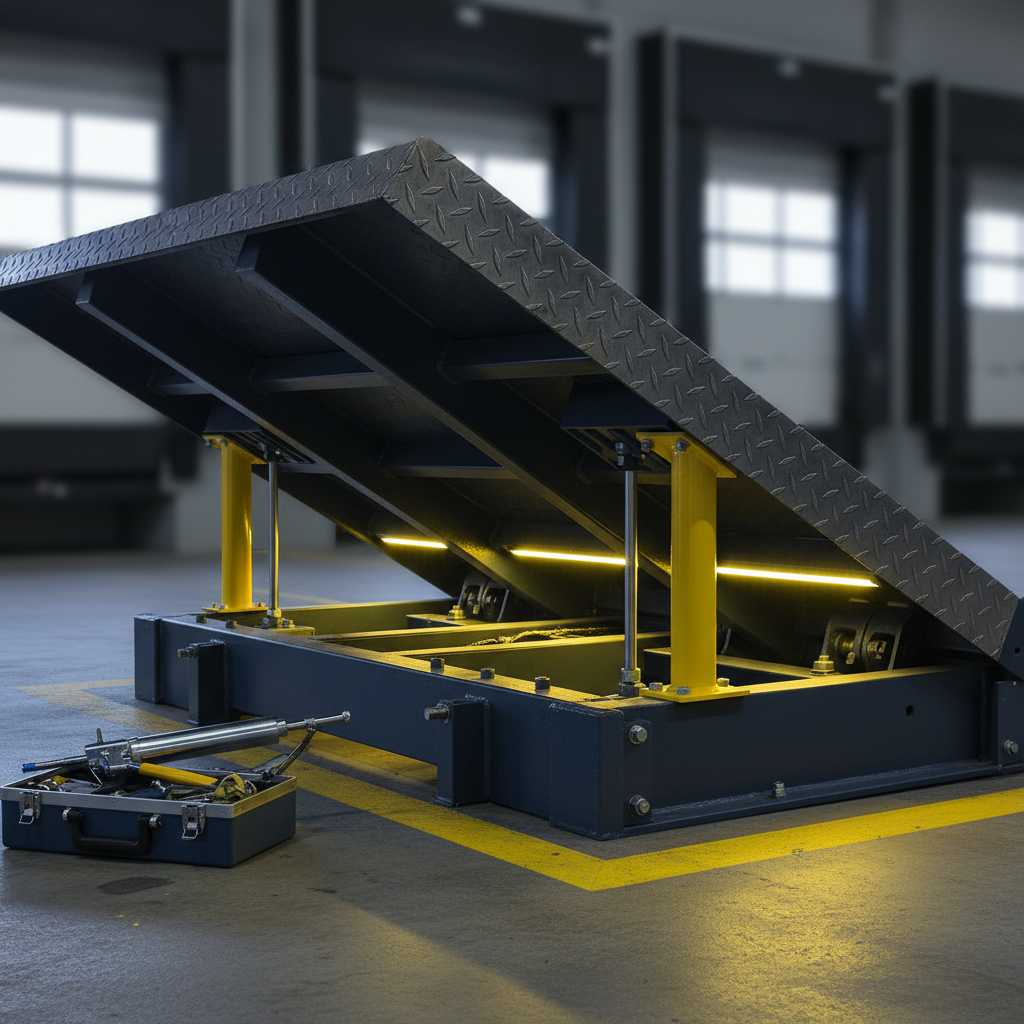
A down leveler closes a door. Planned maintenance, commonly quarterly on busy docks, catches wear before it becomes a breakdown.
- Support the deck on the maintenance strut before anyone works under it, and lock out power on hydraulic and air units.
- Clear debris from the pit so the deck and lip can travel fully.
- Inspect and lubricate hinge pins, lip hinges, and pivot points.
- Check springs and hold-downs on mechanical units, fluid and hoses on hydraulic units, and the bag and blower on air units.
- Test the lip extension, the stored position, and the free-fall or velocity fuse protection.
- Check toe guards, weather seals, and bumpers for damage, and replace worn bumpers before they let trailers strike the leveler.
- Log each service visit and repair so recurring problems at one door stand out.
Dock safety features
Free-fall protection
If a trailer pulls away while the leveler is in use, a velocity fuse or mechanical stop keeps the deck from dropping.
Toe guards
Side plates close the gap below a raised deck so feet cannot be caught.
Vehicle restraints
A restraint holds the trailer against the dock so it cannot creep or pull away while forklifts cross.
Bumpers
Dock bumpers absorb trailer impact that would otherwise go straight into the leveler frame and pit.
FAQ
Pit leveler questions
What is a pit leveler?
A pit leveler is a dock leveler installed in a recessed concrete pit at the dock face. Its steel deck sits flush with the dock floor and pivots at the rear, while a hinged lip at the front extends onto the trailer bed. It bridges the height and gap between the building and the trailer so forklifts and pallet jacks can roll straight in.
Is a pit leveler the same as a dock leveler?
A pit leveler is one kind of dock leveler. The term separates recessed, pit-mounted units from edge-of-dock levelers bolted to the dock face, vertical storing levelers, and portable dock plates or boards. When most people say dock leveler they mean the pit style.
What is the difference between mechanical, hydraulic, and air-powered pit levelers?
Mechanical levelers lift on a spring assembly and are walked down by the operator after a chain release. Hydraulic levelers use a pump and cylinder, controlled by a push button. Air-powered levelers raise the deck with an inflatable bag and a blower. Mechanical costs least up front, hydraulic has the lowest upkeep and best control, and air-powered sits between them.
What capacity pit leveler do I need?
Capacity has to cover the loaded forklift, the load, and the impact of crossing a sloped deck repeatedly. Many facilities use 30,000 to 45,000 lb units, and heavy manufacturing often goes higher. Because steep grades and frequent crossings raise the effective load, specify from your heaviest truck and busiest door rather than the average one, and confirm the rating against ANSI MH30.1 with the manufacturer.
What size pit leveler is standard?
Common widths are 6 and 7 feet, and common lengths run from about 6 to 10 feet, with longer decks available. Longer decks give a gentler slope for the same height difference, which matters for low-clearance pallet jacks and electric trucks. Width is usually matched to the trailer and the dock door opening.
How deep is a dock leveler pit?
Pit depth depends on the model, deck length, and below-dock travel. It is set by the manufacturer's pit drawing, not chosen on site, so always build the pit to the drawing for the exact unit being installed, including the curb angles along the edges and rear.
Can I replace an old pit leveler without breaking out the pit?
Often, yes. Many manufacturers build replacement levelers sized to drop into common existing pit dimensions. Measure the pit width, length, and depth, check the condition of the curb angles and concrete, and send those dimensions when you request a quote.
When should I choose an edge-of-dock leveler instead?
Edge-of-dock units suit docks where trailer beds sit close to dock height and no pit exists or can be cut. They handle only a few inches of height difference. Where trailer heights vary widely, or trucks run in and out all day, a pit leveler gives more service range and a gentler crossing.
Are pit levelers suitable for cold storage?
Yes, with the right options. Refrigerated docks usually add perimeter weather seals around the deck, insulated or thermally broken construction, and sometimes a vertical storing leveler so the door can close against a sealed floor. The goal is to stop cold air escaping around the pit.
How often should a pit leveler be serviced?
Planned maintenance is commonly scheduled every quarter on busy docks and at least twice a year on lighter ones, covering the hinges, lip, springs or hydraulics, controls, and safety devices. Follow the manufacturer's schedule, and always support the deck on its maintenance strut before anyone works under it.
What safety features should a pit leveler have?
Look for toe guards along the sides, free-fall or velocity fuse protection that stops the deck if a trailer pulls away, a maintenance strut, and a lip that seats securely on the trailer bed. Pair the leveler with a vehicle restraint and dock bumpers, and train operators on the release and stored-position procedures.
How long do pit levelers last?
Service life depends mainly on capacity margin, traffic, and maintenance. A correctly sized unit on a planned maintenance schedule lasts many years, while an undersized leveler at a high-traffic door wears out hinges and lips far sooner. Upgrading capacity at replacement time is a common fix.
Request a quote
Get a pit leveler quote
New dock or replacement unit, one door or fifty. Tell us the pit size, the capacity you need, and the trucks you receive, and get a quote back.
- Mechanical, hydraulic, air-powered, and vertical storing
- New construction and drop-in replacements
- Cold storage seals and safety options